


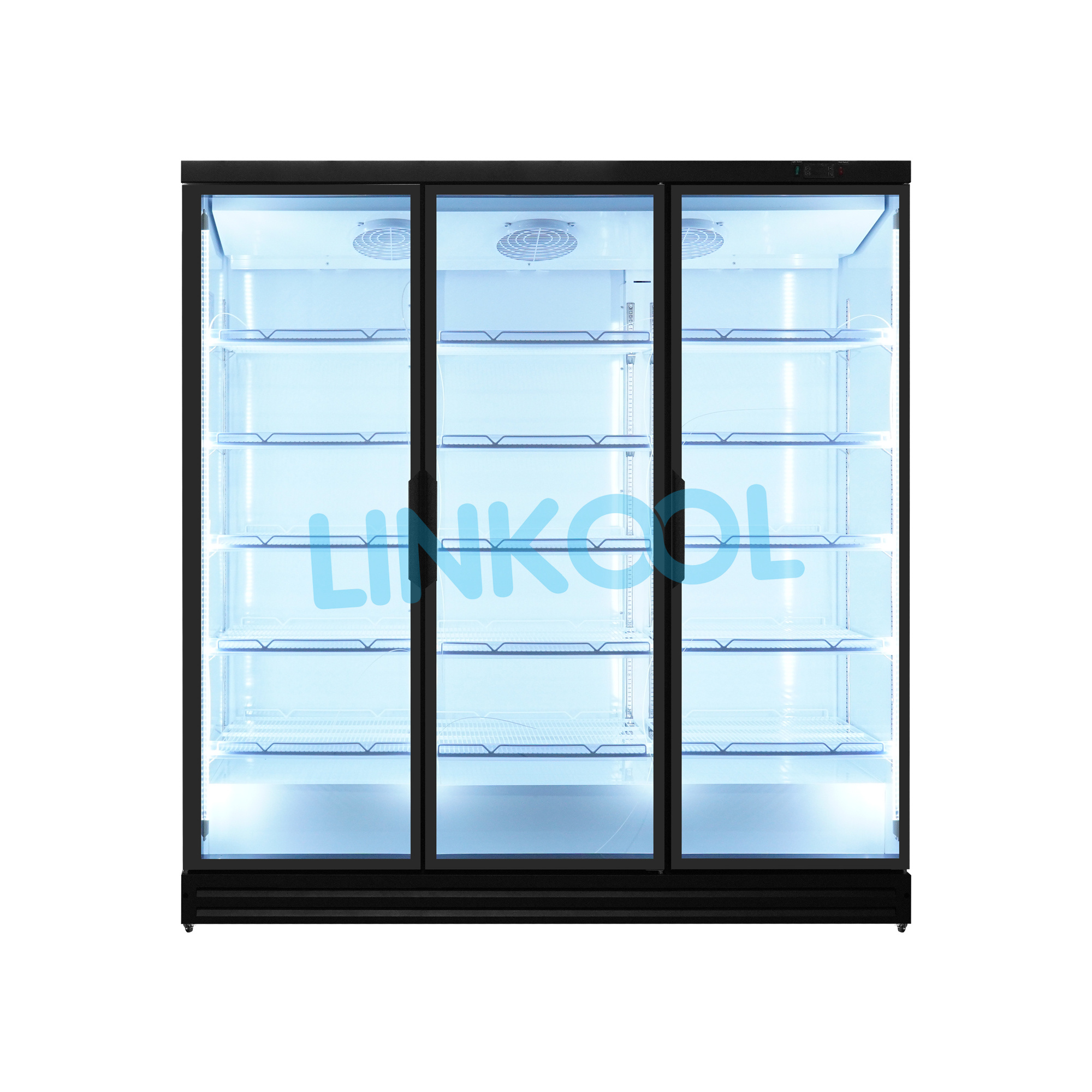
A commercial upright display cooler needs to solve two problems at the same time: keep products properly refrigerated and present them clearly to shoppers.
This 3-door super thin glass door upright display cooler is designed for supermarkets, convenience stores, grocery stores, beverage retailers, cafés, and other commercial environments where refrigerated products need high visibility without taking up unnecessary visual space.
The cabinet features a double-layer tempered Low-E glass door, approximately 26 mm super-thin glass construction, and self-closing doors. The slim glass-door design creates a clean product presentation while helping retailers make better use of refrigerated display space.
For distributors, importers, and supermarket buyers, the key value is not simply the glass thickness. It is the combination of thin-profile glass, Low-E technology, product visibility, door performance, and commercial refrigeration functionality.
The cabinet uses a double-layer glass door with an approximately 26 mm overall glass construction.
For a commercial display refrigerator, reducing the visual thickness of the door can create a cleaner and more modern appearance while maintaining the structural requirements of a commercial refrigerated cabinet.
The result is a display cabinet that puts greater visual emphasis on the products rather than the door structure.
For retailers, this is particularly useful when the refrigerator is installed in a highly visible beverage or fresh-food merchandising area.
The front door uses double-layer tempered Low-E glass.
Low-E, or low-emissivity, glass is designed to reduce radiant heat transfer through the glass surface. In refrigerated display applications, this technology can contribute to better thermal performance, but the actual energy-saving effect depends on the complete refrigeration system, ambient conditions, door-opening frequency, glass specification and other design factors.
Therefore, buyers should evaluate the complete cabinet energy performance, rather than assuming that Low-E glass alone guarantees a specific percentage of energy savings.
If energy consumption is an important purchasing criterion, request the manufacturer's actual test data and test conditions.
The three doors are designed with a self-closing function.
This is particularly useful in supermarkets and convenience stores because refrigerated display doors are frequently opened by customers and staff.
A self-closing mechanism can help reduce the amount of time a door remains unintentionally open.
For commercial buyers, the important questions are:
These details should be included in the technical specification or installation manual.
A 3-door upright configuration provides a practical balance between display capacity, product organization and cabinet footprint.
Retailers can organize products by:
For example, one door section can be used for soft drinks, another for juices and water, and another for dairy or other chilled products.
The exact internal layout should be selected according to the products being displayed and the cabinet's shelf configuration.
A commercial display refrigerator is also a merchandising tool.
The large glass front allows shoppers to see products before opening the doors, while the upright configuration creates a vertical product presentation.
This makes the cabinet suitable for:
Place the 3-door display cooler in beverage aisles, chilled-food sections, dairy areas or high-traffic retail zones.
Use the vertical refrigerated display format to present beverages and grab-and-go products in areas where floor space is limited.
The cabinet can be used for beverages, dairy products, packaged chilled food and other refrigerated merchandise, subject to the required temperature conditions.
The glass-door design allows brands and distributors to create a highly visible branded beverage display.
The cabinet can be used for chilled drinks, dairy products, packaged desserts and ready-to-eat products when the required storage temperature matches the cabinet specification.


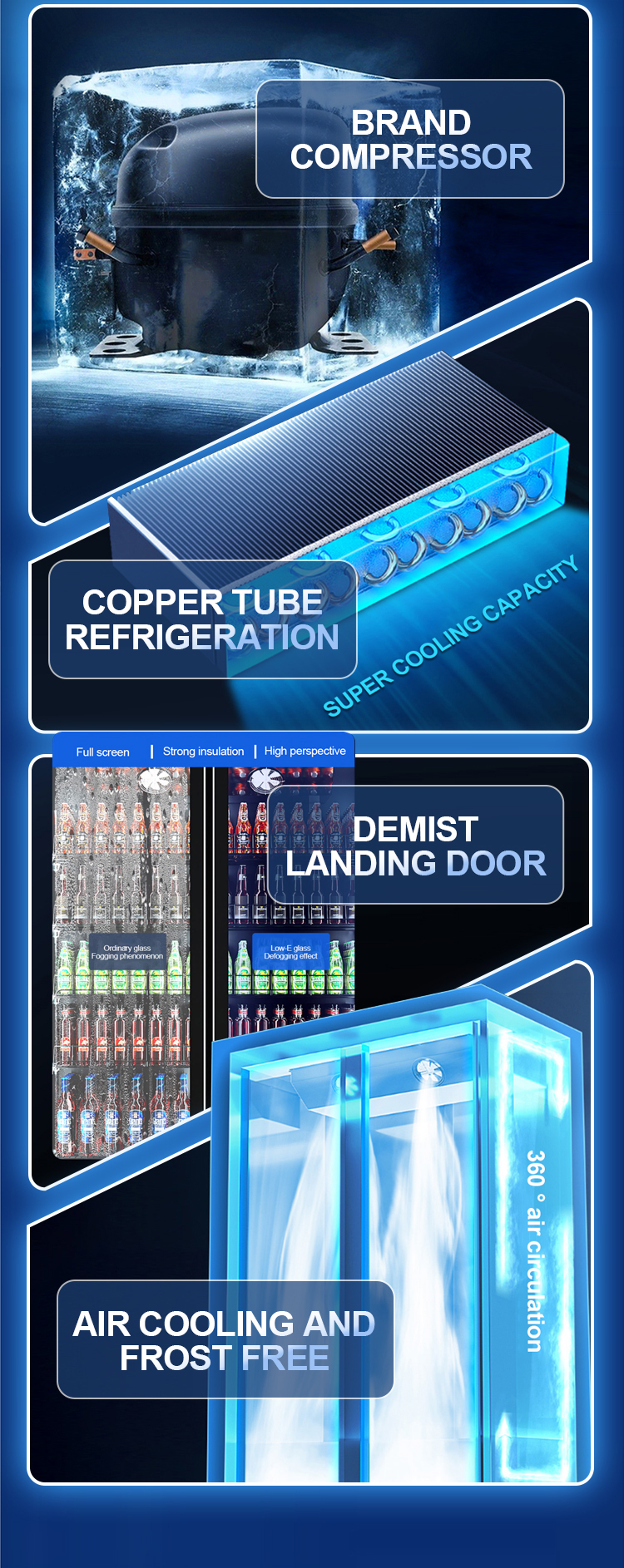


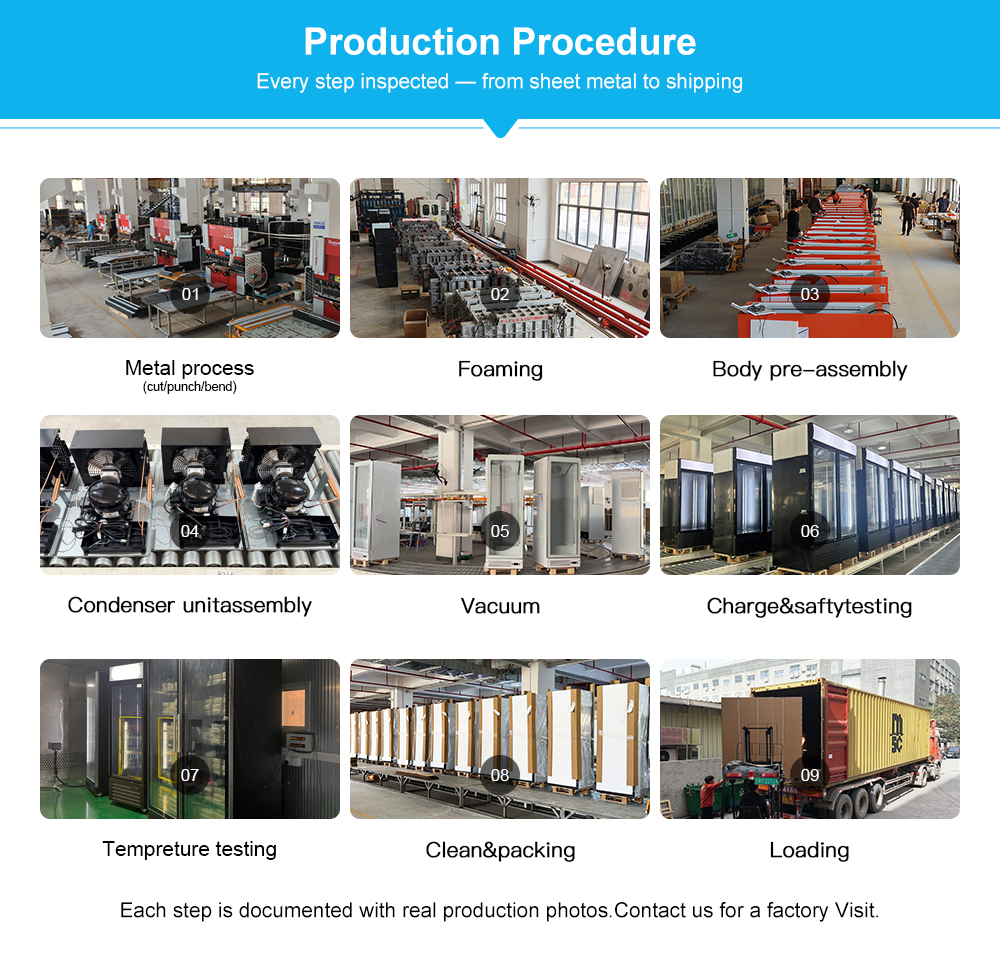
The upright display fridge.efficient and stylish,enhances supermarkets.convenience stores,and bars.It keeps perishables fresh in supermarkets.organizes beverages in convenience
stores,and attracts patrons in bars,boosting sales and customer satisfaction.
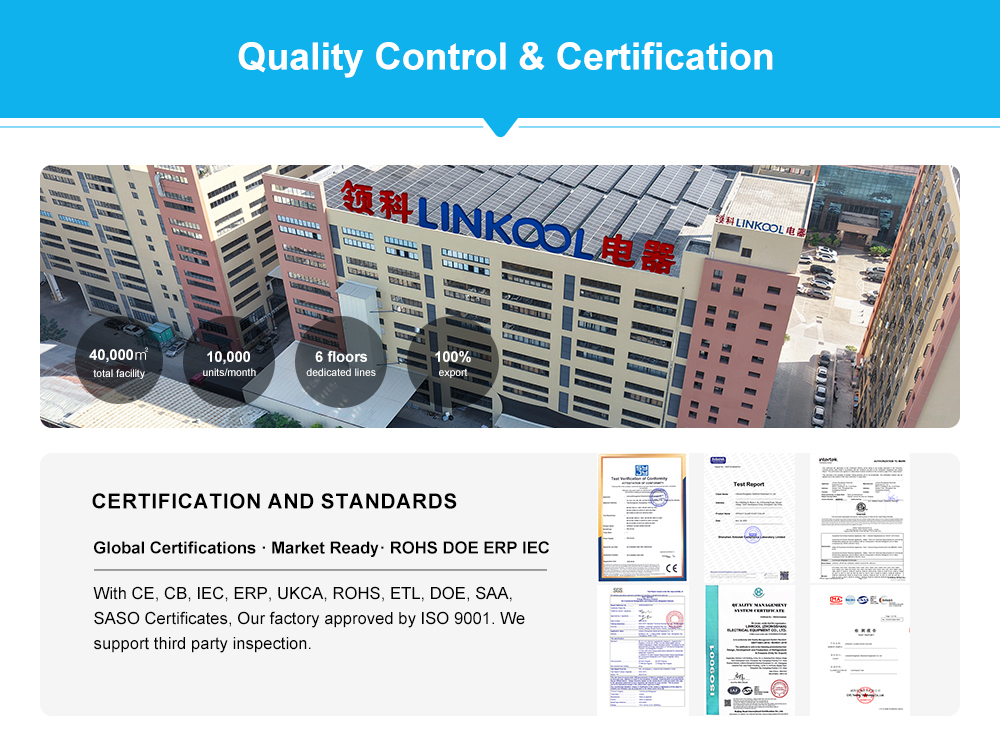
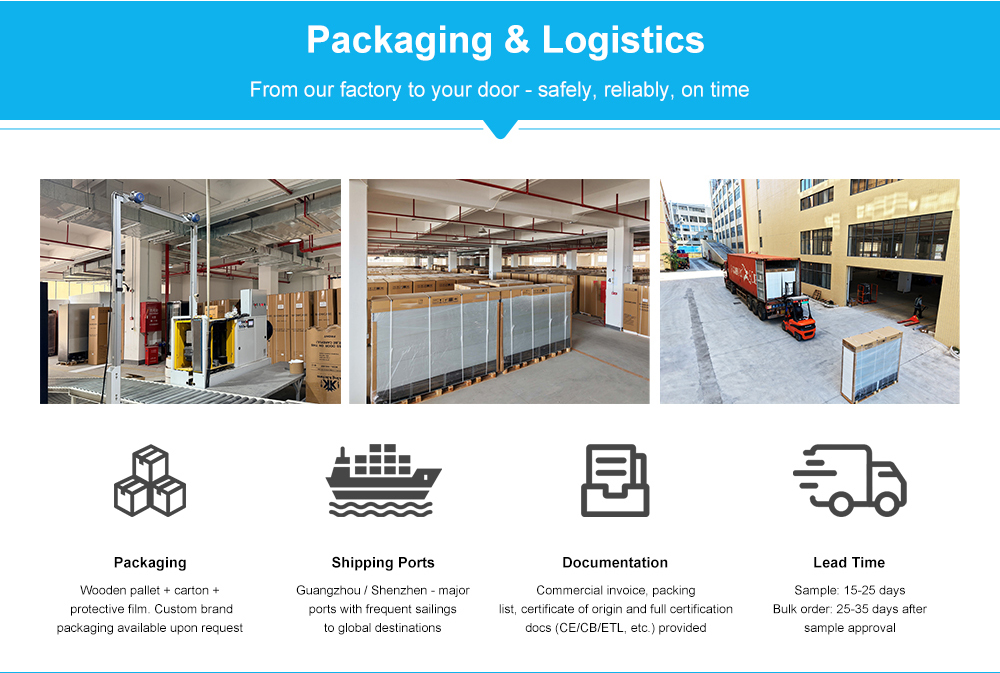
Linkool is an internationally operating manufacturer of commercial refrigeration company, Lincool(Zhongshan) Electrical equipment
leading innovator of temperature-controlled food display cases for supermarket and foodservice operators, produce all range of
plug-in&Remote Multiple doors display chiller&display freezer,Open air chiller,Combine Island freezer,Server counter etc.
Total 35000m2 and 20000+m2 workshops designed capacity of 120000 units per year,In 2014,our company rated as "China
famous brand"by the Federation,In 2018 Company approved by SGS&Obtain IS09001,IS014000 Certificate. most of our products
got CE,CB,GEMS,MEPS,SABER,ETL,NSF7,DOE etc certificate.

Low-E means low emissivity. The glass is designed to reduce radiant heat transfer through the glass surface.
For a refrigerated display cabinet, Low-E glass can contribute to the overall thermal performance of the door. However, actual energy performance depends on the complete refrigerator design and operating conditions.
This model is described as using an approximately 26 mm super-thin glass door construction. Confirm the final glass specification with the manufacturer because the exact construction should be stated in the technical drawing.
Yes. The product is described as using double-layer tempered Low-E glass.
The applicable tempered-glass specification or safety standard should be confirmed for the exact production model.
Yes. The cabinet uses a self-closing door design.
Ask the manufacturer to confirm the tested opening angle, closing mechanism and expected service life.
Three doors allow products to be divided into separate display sections while maintaining an upright commercial refrigeration format.
This can be useful for supermarkets, convenience stores and beverage retailers with multiple product categories.
Yes, provided the cabinet's final temperature range matches the storage requirements of the beverages being displayed.
No. Low-E glass can contribute to thermal performance, but electricity consumption depends on the complete refrigeration system and operating environment.
For procurement decisions, request measured energy-consumption data under defined test conditions.
