


For bars, beverage shops, supermarkets and convenience stores, refrigeration is not only about keeping drinks cold.
A good commercial beverage refrigerator also needs to make products easy to see, easy to access and easy to organize.
The LINKOOL commercial glass door beer cooler is designed for businesses that need reliable refrigerated storage combined with high-visibility product display.
With a full glass door, internal LED lighting, fan cooling, adjustable shelving and digital temperature control, this upright beverage refrigerator provides a practical solution for displaying beer, soft drinks, bottled water, juice, energy drinks and other suitable chilled beverages.
Whether installed behind a bar, along a supermarket aisle or inside a convenience store, the upright design makes use of vertical space while keeping products clearly visible to customers.
| Feature | Specification |
|---|---|
| Product Type | Commercial Glass Door Beer Cooler |
| Application | Beverage Refrigeration & Display |
| Cooling System | Fan Cooling |
| Temperature Control | Digital |
| Display | Full Glass Door |
| Lighting | Internal LED Lighting |
| Shelves | Adjustable |
| Defrost | Automatic |
| Installation | Upright / Vertical |
| Applications | Bars, Supermarkets, Convenience Stores, Beverage Shops, Restaurants |
| Customization | OEM / ODM Available |
Exact specifications should be confirmed according to the selected model and configuration.
A traditional refrigerator focuses primarily on storage.
A commercial glass door cooler has another important function:
Customers can see the beverages inside without opening the refrigerator.
This allows retailers and bar operators to create a clear product display for:
The result is a practical combination of:
Cold Storage + Product Visibility + Easy Access
For retail businesses, this can make the refrigeration cabinet part of the overall sales display rather than simply a back-of-house appliance.
The full glass door provides customers with a clear view of the products inside the cabinet.
This is especially valuable when beverage brands rely on packaging, labels and colors to attract attention.
A well-organized glass-door display allows customers to identify products before opening the door.
For retailers, the display can be arranged according to:
Brand → Product Category → Package Size → Price → Promotion
This makes the upright cooler suitable for both everyday beverage storage and merchandising.
A beverage display is more effective when products can be clearly seen.
The refrigerator uses internal LED lighting to illuminate the refrigerated display area.
Vertical LED lighting helps make different shelf levels easier to see and allows product packaging to remain visible even in stores with relatively low ambient lighting.
This can be particularly useful in:
The combination of glass doors + LED lighting + organized shelving creates a cleaner and more professional beverage presentation.
The commercial beer cooler uses a fan cooling system to circulate refrigerated air inside the cabinet.
Forced-air circulation helps distribute cooled air around the storage area and is suitable for commercial environments where doors may be opened frequently throughout the day.
Typical operating conditions may include:
For optimal cooling performance, products should not block air outlets or return-air areas.
The actual refrigeration performance of any commercial cooler depends on factors such as:
The digital temperature controller provides a convenient way to monitor and manage cabinet temperature.
For commercial beverage refrigeration, temperature requirements depend on the products being stored.
Beer, soft drinks, water, dairy beverages and other refrigerated products may have different storage requirements.
Operators should always follow the product manufacturer's recommended storage temperature.
For B2B procurement, buyers should confirm the exact temperature range and controller configuration for the selected model before ordering.
Commercial beverage coolers can accumulate frost or condensation depending on operating conditions, ambient humidity and door-opening frequency.
An automatic defrost system helps reduce the need for frequent manual defrosting and supports easier day-to-day operation.
The actual defrost method and control logic should be confirmed according to the selected configuration.
Regular cleaning and proper maintenance remain important for long-term refrigeration performance.
Beer bottles, cans and soft drink packaging come in different sizes.
Adjustable shelving allows operators to change the internal layout according to the products being displayed.
For example:
Suitable for premium beverages, new products or promotional items.
Ideal for frequently purchased drinks positioned within the main customer viewing area.
Suitable for larger bottles, heavier products or bulk beverage storage.
This flexibility allows the same commercial beverage cooler to support different merchandising strategies.
Retail floor space is expensive.
An upright beverage refrigerator uses vertical space to provide refrigerated storage and product display without requiring the large horizontal footprint of some other refrigeration formats.
This makes upright glass door coolers particularly useful for:
Add beverage refrigeration without occupying excessive floor area.
Create organized refrigerated beverage sections along retail aisles.
Display multiple brands and product categories in a single vertical cabinet.
Keep beer and other beverages visible and accessible during service.
Provide refrigerated beverage storage in customer-facing or service areas.
Place chilled drinks in visible, high-traffic areas for quick customer selection.
Bars have different refrigeration requirements from traditional retail stores.
During busy service periods, staff need to identify and access beverages quickly.
A glass door beer cooler provides:
Clear Product Visibility
Organized Storage
Fast Beverage Identification
Easy Stock Monitoring
Beer bottles and cans can be arranged by brand, size or sales volume, helping staff locate products efficiently during busy periods.
For bars with limited space, an upright refrigerator can also provide additional beverage storage without requiring a large counter footprint.
Supermarkets typically require both refrigeration performance and strong product presentation.
The glass-door design allows customers to view beverages from outside the cabinet, while adjustable shelves allow different product categories to be organized within the same unit.
The refrigerator can be used for:
Multiple cabinets can also be arranged together to create a dedicated beverage merchandising section.
Convenience stores often operate for long hours and experience frequent customer traffic.
This means the beverage refrigerator may be opened repeatedly throughout the day.
A commercial upright cooler should therefore provide:
The LINKOOL glass-door beverage cooler combines these functions into one upright refrigeration solution.
Choosing a commercial beer refrigerator should begin with the actual operating requirements of your business.
Identify whether the cabinet will primarily store beer, soft drinks, water, dairy beverages or a combination of products.
Confirm the storage temperature required by the products before selecting the refrigerator.
Higher sales volume generally requires greater refrigerated display capacity.
Check the available width, depth and height before selecting the cabinet.
High-traffic stores and bars may open the refrigerator significantly more frequently than low-traffic locations.
Temperature and humidity at the installation site can influence refrigeration performance.
Confirm voltage and frequency requirements for the destination market.
Importers should verify the certifications required by their target market before placing an order.
Distributors and private-label buyers should confirm logo, color, packaging and other OEM requirements before production.
For importers, distributors, wholesalers and retail chains, buying a commercial refrigerator involves more than comparing the product price.
A reliable supplier should also provide:
Buyers should have access to accurate dimensions, capacity, temperature and electrical information.
Production and final inspection help identify manufacturing problems before shipment.
Commercial refrigeration equipment needs suitable protection during international transportation.
Replacement parts can help distributors provide better long-term service to their customers.
Clear product documentation makes installation, operation and after-sales support easier.
Private-label buyers may require customized branding, color, packaging or product configurations.
LINKOOL supports B2B commercial refrigeration projects and can discuss customization according to the selected model and order requirements.
Potential customization options may include:
OEM/ODM requirements should be confirmed during the quotation and product-development process.
For B2B buyers, manufacturing capability is an important part of supplier evaluation.
A professional commercial refrigeration production process typically includes:
Materials and components are inspected before entering production.
Cabinet panels are cut, formed and prepared for assembly.
Structural components are assembled according to the product design.
Insulation material is injected into the cabinet to create the insulated structure.
The compressor, condenser, evaporator and related refrigeration components are installed.
Temperature controllers, LED lighting and electrical components are installed and checked.
The completed refrigerator is operated under defined test conditions.
Appearance, dimensions, refrigeration operation and accessories are inspected.
Finished products are packaged for transportation to international markets.
For stronger product credibility, manufacturers should support these claims with real factory photographs, production-line images, inspection records and testing data.
Commercial refrigeration performance should ideally be supported by measurable testing rather than generic claims.
Depending on the product and project requirements, testing may include:
Measure temperatures at multiple positions inside the cabinet.
Evaluate cooling performance under representative product loading.
Simulate frequent access to reproduce real commercial operating conditions.
Evaluate performance under expected ambient temperature and humidity conditions.
Measure electricity consumption under clearly defined test conditions.
A useful technical test report should identify:
Test Environment
Test Method
Test Duration
Measurement Equipment
Test Results
Providing this information gives B2B buyers a clearer basis for evaluating commercial refrigeration equipment.
The LINKOOL commercial glass door beer cooler can be considered for:
Bars
Pubs
Restaurants
Supermarkets
Convenience Stores
Mini Markets
Beverage Shops
Hotels
Gas Station Stores
Retail Chains
The final product configuration should be selected according to the application, required capacity, temperature range and destination-market requirements.
LINKOOL focuses on commercial refrigeration solutions for international B2B customers.
The product portfolio includes:
For distributors, importers and retail projects, refrigeration equipment can be selected according to:
Capacity + Temperature + Cabinet Size + Door Configuration + Electrical Specification + Market Requirements


The upright display fridge.efficient and stylish,enhances supermarkets.convenience stores,and bars.It keeps perishables fresh in supermarkets.organizes beverages in convenience
stores,and attracts patrons in bars,boosting sales and customer satisfaction.
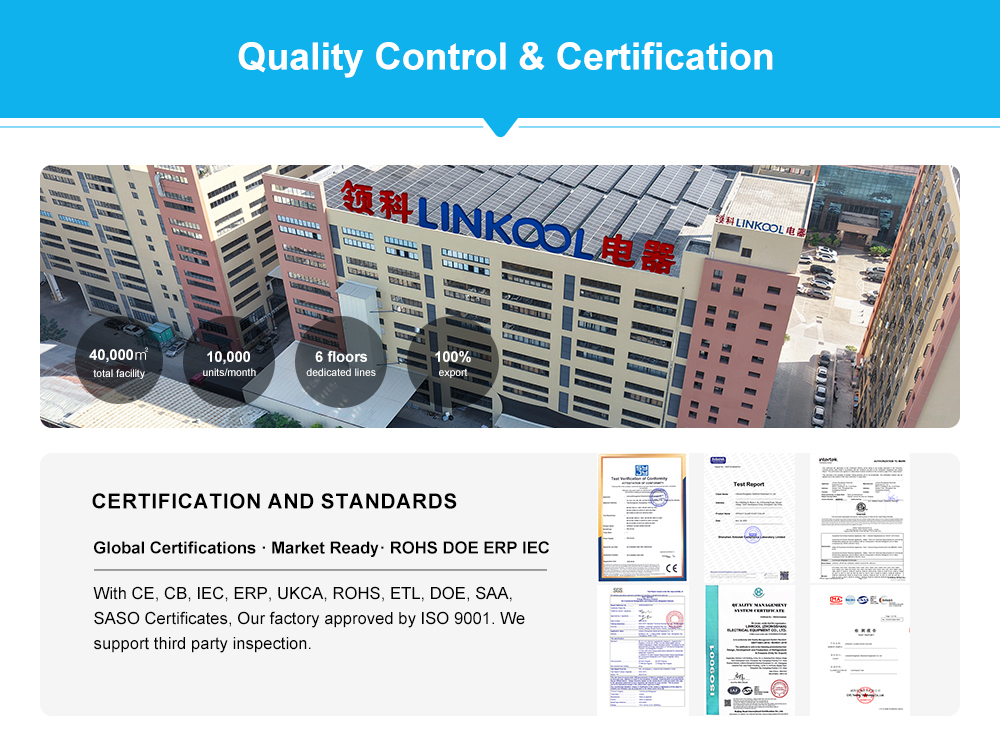
Linkool is an internationally operating manufacturer of commercial refrigeration company, Lincool(Zhongshan) Electrical equipment
leading innovator of temperature-controlled food display cases for supermarket and foodservice operators, produce all range of
plug-in&Remote Multiple doors display chiller&display freezer,Open air chiller,Combine Island freezer,Server counter etc.
Review
Review
